




abril 19, 2026
stevem
Auto Insurance Coverage Gaps Georgia Drivers Miss
Picture this: a Georgia driver gets rear-ended at a busy Atlanta intersection. The other driver is at fault, but here is the problem. The at-fault driver only carries the state minimum, $25,000 in property damage liability, and the car that just got hit is a two-year-old vehicle worth nearly $40,000. The gap between what the at-fault driver’s insurance pays and what it actually costs to make things right falls entirely on the driver who did nothing wrong. Situations like this play out across Georgia every day, and they almost always trace back to the same root cause: coverage gaps that nobody mentioned when the policy was signed. Georgia law only requires a 25/50/25 liability policy, a threshold that insurance professionals widely regard as dangerously low given today’s vehicle values, medical costs, and accident severity. The gaps between what is required and what is adequate are real, specific, and surprisingly common. This post identifies the ones Georgia drivers most often miss and explains exactly why they matter.
Why Georgia’s Minimum Coverage Leaves So Much Exposed
Georgia’s required 25/50/25 liability policy covers damages you cause to other people and their property. It does not cover your vehicle, your medical bills, or your passengers. It also does not protect you when the other driver has no insurance or not enough of it. In a state where uninsured driver rates run somewhere between 18 and 25 percent depending on the source, and where a moderate accident involving a newer vehicle can easily exceed $100,000 in total damages, the minimum policy is a legal floor, not a financial safety net. Most licensed insurance professionals recommend carrying at least 100/300/100 in liability coverage, but limits alone are not the only thing worth examining. The specific gaps below are where Georgia drivers most often find themselves exposed.
The Coverage Gaps Georgia Drivers Most Commonly Miss
Skipping Uninsured and Underinsured Motorist Coverage
This is the single most consequential gap on Georgia roads. Uninsured and underinsured motorist coverage protects you when the at-fault driver either has no insurance or carries limits too low to cover your actual losses. Georgia insurers are required by law to offer this coverage with every policy, but drivers can decline it in writing, and many do. Given that roughly one in five vehicles on Georgia roads may be operating without coverage, declining this protection is a significant financial risk. If an uninsured driver causes serious injuries, your options without UM/UIM coverage are limited to pursuing the at-fault driver personally, which is often fruitless, or absorbing the costs yourself.
Carrying Liability Limits That Are Too Low
Even drivers who purchase liability coverage beyond the state minimum sometimes carry limits that fall short in a serious accident. The state minimum of $25,000 per person for bodily injury may not cover a single hospitalization, and $25,000 in property damage may not fully replace a newer vehicle. When your liability limits are exhausted, you are personally responsible for the remainder. Drivers with significant assets or income are especially exposed by low limits, since they represent a more attractive target in civil litigation following a serious at-fault accident.
No GAP Coverage on a Financed or Leased Vehicle
Vehicles depreciate quickly from the moment they leave the lot. If your car is totaled, your insurer pays the actual cash value at the time of the loss, not what you originally paid or what you still owe on your loan. If you financed your vehicle with a small down payment or are carrying a longer loan term, there is a real chance your settlement check falls short of your remaining loan balance. GAP coverage bridges that difference and prevents a totaled vehicle from leaving you still making payments on a car you no longer have. Georgia lenders cannot legally require you to purchase GAP coverage, but for drivers with little equity in their vehicle, skipping it carries meaningful financial risk.
Missing Rental Car Reimbursement Coverage
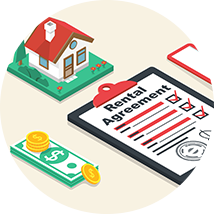
When your vehicle is in the shop following a covered claim, the cost of a rental car is not automatically covered by your policy. Rental reimbursement is an optional add-on that pays for a temporary vehicle while yours is being repaired. Without it, that expense comes out of pocket. It is typically one of the least expensive endorsements available, yet it is one of the most commonly overlooked until a driver finds themselves stranded without transportation after an accident.
The Rideshare Coverage Blind Spot
Georgia drivers who use their personal vehicle to drive for platforms like Uber or Lyft carry a coverage gap that most do not discover until after an accident. Personal auto policies exclude coverage when a vehicle is being used for commercial or livery purposes. Rideshare companies like Uber and Lyft do provide some liability coverage, but during Period 1 of a trip, when the app is on but no ride has been accepted, that coverage is limited and your personal policy has already stepped aside. A rideshare endorsement added to a personal policy fills that gap across all phases of the driving cycle and is available from most major carriers operating in Georgia.
Overlooking Medical Payments Coverage
Georgia is an at-fault state, meaning your own medical bills after an accident are not covered by liability insurance unless someone else was at fault and their policy responds. Medical payments coverage, commonly called MedPay, pays for your medical expenses and those of your passengers regardless of who caused the accident, typically between $5,000 and $10,000 in coverage. For drivers with high-deductible health plans or limited health coverage, MedPay can cover the out-of-pocket gap between what health insurance pays and what the treatment actually costs.
How Coverage Gaps Become Financial Emergencies
Coverage gaps are invisible until they are not. Drivers rarely discover them during a routine renewal. They surface in the hours and days following an accident when the reality of what a policy does and does not cover becomes impossible to ignore. Out-of-pocket medical expenses, unexpected loan balances on totaled vehicles, and rental costs that were never planned for can compound quickly and turn an already difficult situation into a lasting financial setback.
How to Find and Close the Gaps in Your Current Policy
The most effective first step is reviewing your declarations page and identifying every coverage currently listed along with its limits. Then ask your agent a direct question: given my vehicle, my loan balance, my driving habits, and my financial situation, where am I exposed? That conversation often surfaces gaps that a standard renewal process would never flag. Most coverages, including UM/UIM, MedPay, rental reimbursement, and GAP, can be added to an existing policy outside of the renewal cycle, so there is no reason to wait.
The Bottom Line
Georgia’s minimum insurance requirement gets you legal. It does not get you protected. The gaps outlined in this post are not edge cases. They are the situations that Georgia drivers encounter regularly, and the financial consequences of being underinsured in those moments are entirely avoidable with the right policy in place.
Ready to find out where your current coverage might be falling short? Get a free quote today and make sure the policy you are paying for is actually built to protect you.
Categories: Auto Insurance